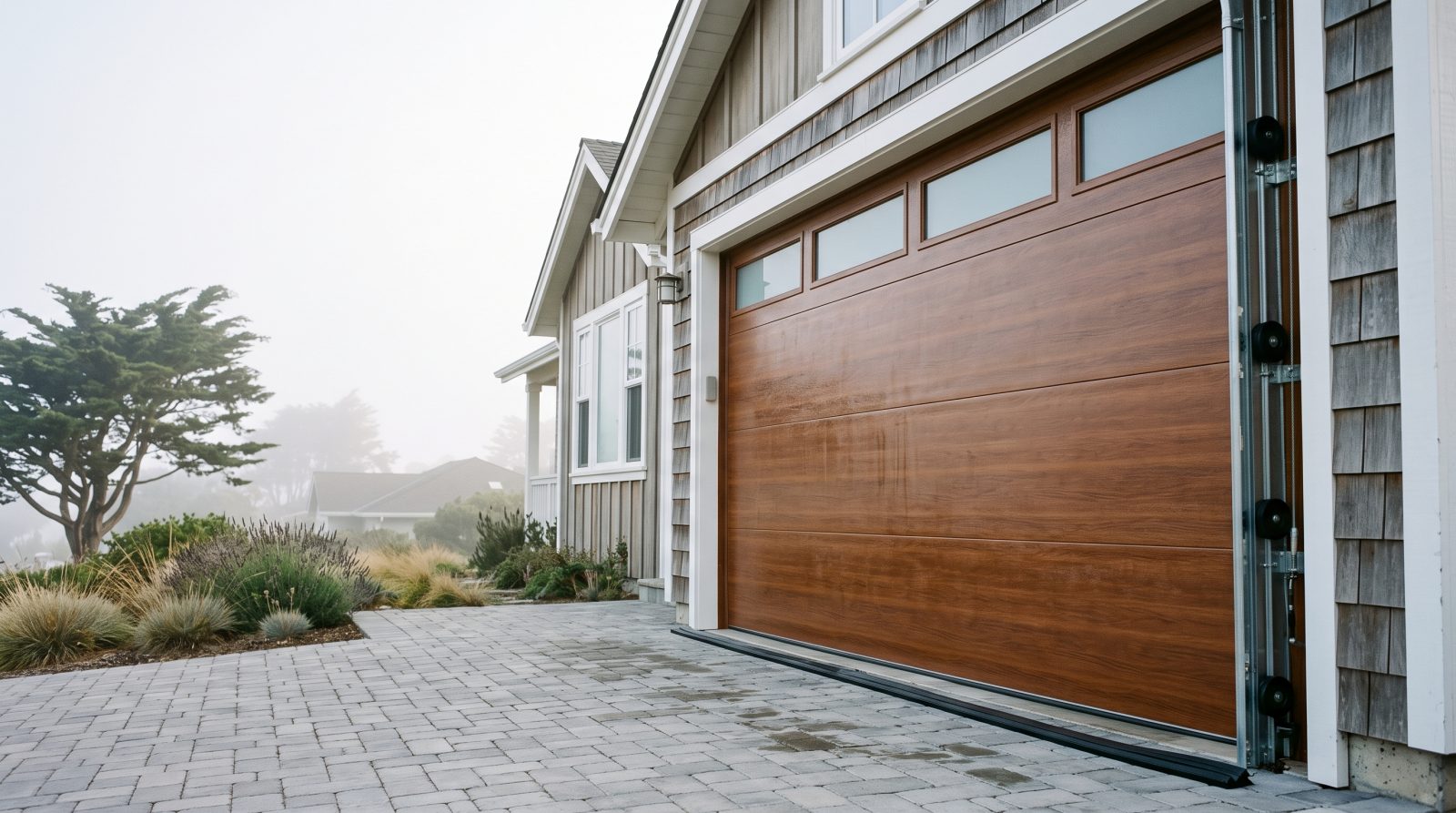
Why Fiberglass Makes Sense for San Diego's Coastal Climate
San Diego's coastal corridor is one of the more demanding environments a garage door faces, not because of extreme heat or cold, but because of constant moisture and salt. The marine layer that rolls over neighborhoods like Pacific Beach, Mission Beach, and Sunset Cliffs deposits a fine film of salt and humidity on everything it touches, every single morning. That relentless cycle is exactly what corrodes steel and warps natural wood over time. Fiberglass, by contrast, simply does not rust and does not absorb water the way wood does, which makes it a natural fit for homes near the water.
Because fiberglass is a composite material, it stays dimensionally stable through the daily temperature and humidity swings that define a coastal San Diego day, where you can start in a cool 60-degree fog and finish in warm afternoon sun. Doors that expand, contract, and swell with moisture tend to bind, stick, and throw their tracks out of alignment. Fiberglass shrugs off most of that movement, which generally translates to smoother operation and fewer nuisance service calls over the life of the door.
It is worth being honest about the nuance: fiberglass is not magic, and the metal hardware around it (springs, hinges, rollers, brackets) still lives in the same salt air. The composite skin resists the coast far better than steel or wood skins, but coastal homeowners still benefit from corrosion-resistant hardware and routine maintenance, which we cover during a mobile visit.
- Does not rust, a real advantage within a few miles of the Pacific
- Resists moisture absorption, so it will not swell or rot like natural wood
- Stays dimensionally stable through marine-layer-to-afternoon-sun swings
- Pairs well with corrosion-resistant hardware for full coastal protection
- Lightweight, which can mean less long-term strain on the opener and springs
How Fiberglass Compares to Steel and Wood Here
Most San Diego homeowners weighing a new door are really choosing between three families of material: steel, wood, and fiberglass. Steel is the most common and budget-friendly choice, and modern steel doors come well-finished. The honest caveat near the coast is that any scratch, ding, or chip in the finish can become a starting point for rust once salt air finds the bare metal underneath. That is a manageable issue inland, but it is a more active concern in beach-adjacent neighborhoods.
Real wood doors deliver a warmth and high-end look that nothing else fully replicates, which is why you still see them on craftsman and custom homes around Mission Hills and Kensington. The trade-off is maintenance: wood wants periodic refinishing and is vulnerable to moisture, warping, and rot in humid, salty conditions. For a homeowner who loves the wood aesthetic but does not want the upkeep near the water, this is exactly where fiberglass earns its place.
Fiberglass sits in an interesting middle ground. The best fiberglass doors are molded and finished to convincingly mimic wood grain, giving you much of that natural look without the refinishing schedule or the rot risk. It is typically lighter than steel and far more corrosion-resistant, which suits coastal homes. The trade-offs are real and worth knowing up front, so you can make the call with eyes open rather than being surprised later.
- Steel: affordable and strong, but chips and scratches can rust in salt air
- Wood: beautiful and warm, but high-maintenance and prone to moisture damage
- Fiberglass: rust-proof, low-maintenance, and can convincingly imitate wood grain
- Fiberglass is lighter than steel, which can ease wear on opener and springs
- For coastal homes prioritizing low upkeep plus a wood look, fiberglass is a strong fit
The Honest Trade-Offs of Fiberglass
A good recommendation includes the downsides, not just the highlights. Fiberglass is impact-resistant in the sense that it resists dents that would mar a steel panel, but it can be more prone to cracking under a hard, concentrated blow, such as a basketball at full speed or a bumper tap. Steel may dent where fiberglass might crack, and a cracked panel usually needs replacement rather than a pull-out repair. For households with active driveways and sports, this is a genuine consideration.
Color and finish are the second honest trade-off. Years of intense UV exposure once the morning fog clears can gradually fade some fiberglass finishes, particularly darker tones, though quality modern doors are far better at resisting this than older generations. Insulation is the third: fiberglass doors can be insulated, but you should confirm the specific door's insulation rating rather than assuming, especially if your garage is attached or used as a workspace, gym, or studio.
None of these trade-offs disqualify fiberglass for San Diego homes. They simply mean the right answer depends on your specific street, sun exposure, household, and priorities. That is precisely the kind of judgment we bring on a mobile visit, where we can see your actual opening, orientation, and surroundings instead of guessing from a brochure.
- Can crack under a hard, focused impact rather than denting like steel
- A cracked panel typically means replacement, not a simple repair
- Darker finishes may fade over years of strong post-fog UV exposure
- Insulation varies by model, so confirm the R-value if temperature control matters
- Often a higher upfront cost than basic steel for comparable styling
Mobile Fiberglass Installation and Service Across San Diego
We are a mobile, we-come-to-you San Diego garage door company, so the entire process for a fiberglass door happens at your home. That starts with accurate on-site measuring, which matters more than people expect: the rough opening, headroom, side room, and backroom all determine which doors and track configurations will actually fit and operate cleanly. Measuring in person also lets us assess your existing opener, springs, and hardware so the new door is matched to a system that can handle it safely.
From there we handle removal of the old door, installation of the fiberglass door and tracks, balancing of the spring system, and a full operational test before we leave. Because coastal hardware takes a beating, we will talk through corrosion-resistant rollers, hinges, and fasteners where it makes sense for your location, so the door and the metal around it are protected as a system rather than just the visible panel.
Service does not end at installation. Fiberglass is low-maintenance, but every door benefits from periodic checks of the springs, rollers, alignment, and weather seals, especially in salt air. If you already have a fiberglass door that is sticking, sagging, or showing a damaged panel, we can come out, diagnose it on-site, and tell you honestly whether it is a repair or a replacement situation. Coverage spans the broader San Diego area, from the coast to the inland communities.
- On-site precision measuring of your actual opening, headroom, and side room
- Old-door removal, fiberglass install, spring balancing, and full safety test
- Corrosion-resistant hardware options for beach-adjacent homes
- Same-day help available for many repair and service requests
- Mobile service across coastal and inland San Diego neighborhoods
What Fiberglass Garage Doors Typically Cost
Pricing for any garage door depends on size, insulation, window and hardware options, finish quality, and the condition of your existing opening and opener. As a general industry guide, fiberglass doors usually land above entry-level steel and often below high-end custom wood, reflecting their position as a premium-look, low-maintenance option. Treat any figure you see online as a broad range, not a quote, because your specific door and installation conditions drive the real number.
There are also cost factors unique to a coastal install. If your old door corroded the hardware, or if your opener and springs need to be matched to a new door, those items affect the total. The most accurate way to know your number is a mobile visit where we measure, inspect the surrounding system, and confirm exactly what your home needs. We will give you a clear, itemized free quote so there are no surprises, and you can decide with full information.
If your goal is the wood aesthetic with minimal upkeep near the water, fiberglass frequently delivers strong long-term value because you are not paying for refinishing cycles or fighting rust down the road. If budget is the single biggest driver, a quality insulated steel door may still be the more economical path, and we will tell you that plainly rather than pushing you toward a more expensive material.
- Costs are labeled industry ranges, never a fixed quote until we measure
- Door size, insulation, windows, and finish quality all move the price
- Coastal corrosion or a mismatched opener can add to the scope
- A free on-site quote gives you a clear, itemized number for your home
- Lower lifetime maintenance can offset a higher upfront cost over time