When It Makes Sense to Replace Instead of Repair
Not every problem calls for a new door. A snapped spring, a worn roller, or a single dented panel is usually a repair. Replacement starts to make sense when the cost and frequency of repairs stack up, or when the door is failing in ways that cannot be patched. The honest test we use on site: if fixing the door costs a meaningful fraction of a new one, or if the section is rusted, warped, or structurally compromised, replacement is the smarter long-term spend.
San Diego's environment pushes a lot of older doors toward replacement earlier than you might expect. Homes in coastal zones like Ocean Beach, Pacific Beach, La Jolla, and Coronado deal with salt air that corrodes steel hardware and eats finishes faster than inland neighborhoods. Older steel doors near the water often show rust streaking and pitting on the hardware long before an identical door would in El Cajon or Poway. On the flip side, inland and East County doors bake in strong afternoon sun, which can fade finishes and brittle out older insulation over years.
- The door has multiple bent, cracked, or rusted sections rather than one isolated dent
- You are repairing the same door repeatedly within a short span
- The door is a single-layer, non-insulated panel and you want quieter, more efficient operation
- You are upgrading curb appeal before a sale or after a remodel
- The current door is too heavy or unbalanced for the opener and hardware to handle safely
How On-Site Measuring Works
Accurate installation starts with accurate measuring, and that is why we measure in person rather than over the phone. A garage opening that looks standard from the street can be slightly out of square, have a low header, or have tight side room from how the original framing was built, very common in older San Diego homes in neighborhoods like North Park, Kensington, and parts of Bankers Hill. Ordering a door off a guessed size is how installs go wrong, so we take real numbers off your actual opening before recommending anything.
When we measure, we capture the rough opening width and height, then the critical clearances that determine which door and hardware will physically fit. Headroom (the space above the opening to the ceiling) decides whether standard, low-headroom, or high-lift track is needed. Side room (the space on each side of the opening) has to accommodate the vertical track and spring hardware. Backroom (the depth into the garage) has to be deep enough for the door to roll fully open. We also note the header condition, the floor level, and how the opener is mounted.
From those measurements we tell you exactly what your opening supports. If a door style you love needs more headroom than you have, we will say so up front and offer a track solution or an alternative, rather than promising a fit that forces a compromise later.
- Rough opening width and height of the actual door opening
- Headroom above the opening to determine the track type
- Side room on both sides for vertical track and spring hardware
- Backroom depth so the open door clears lights, storage, and the ceiling
- Header condition, floor level, and opener mounting so the finished door operates true
Choosing the Right Door for Your San Diego Home
Once we know what your opening supports, the next step is matching a door to your home's style, your location's climate, and how you use the garage. The biggest decisions are material, insulation, and design. Each one affects how the door looks, how quietly it runs, how it holds up to local conditions, and how it pairs with your opener.
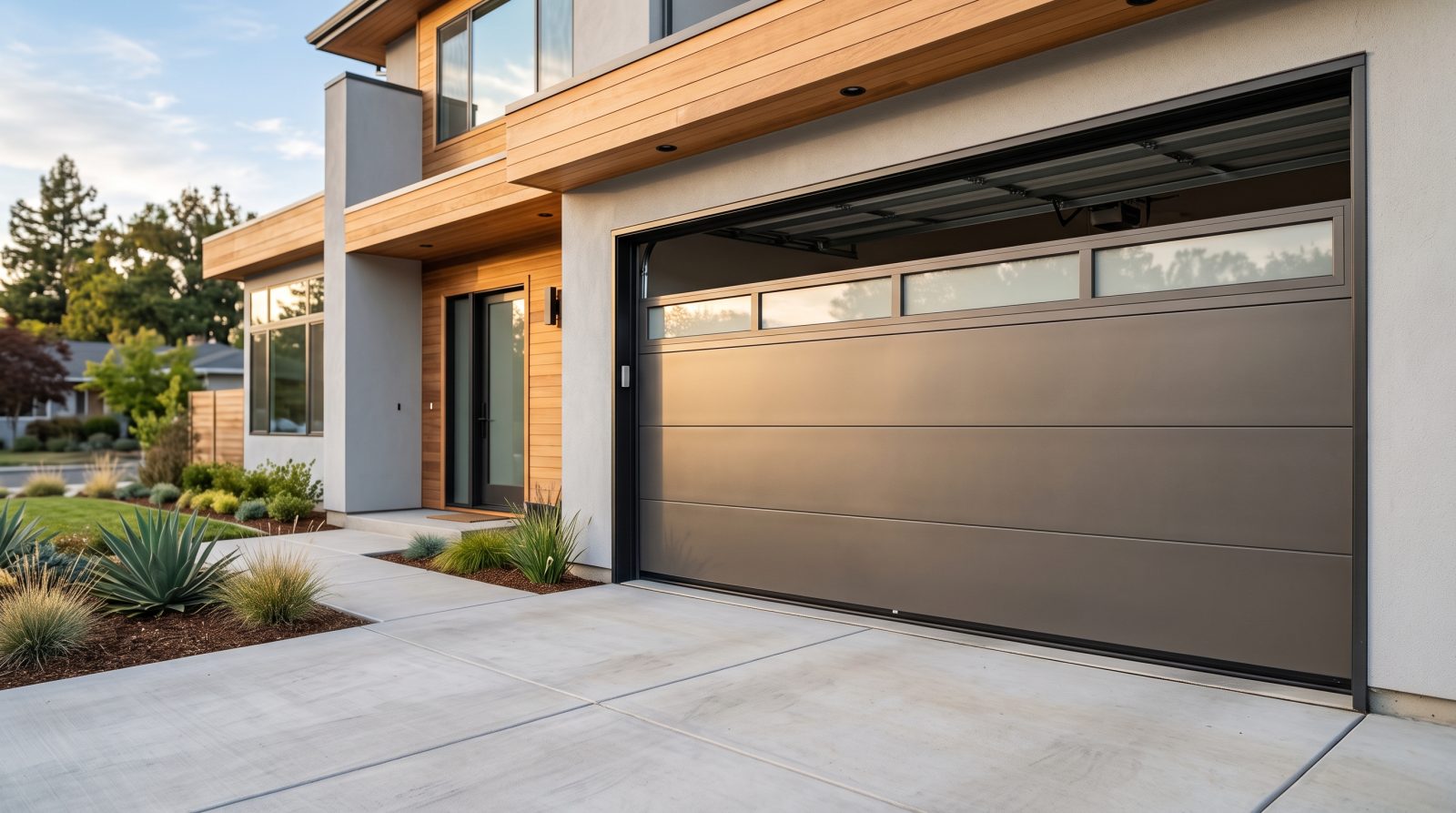
Material matters most near the coast. Steel doors are durable and cost-effective, but coastal homeowners should weigh corrosion resistance and finish quality given the salt air. Aluminum and glass doors give a clean modern look popular in newer La Jolla and Downtown-adjacent builds. Solid wood and wood-look composite doors suit the Spanish, Craftsman, and ranch styles common across Mission Hills, South Park, and older established neighborhoods, with composite holding up to sun and moisture better than natural wood.
Insulation is worth real consideration even in a mild climate. An attached garage shares a wall with living space, and an insulated door keeps that buffer zone more stable, which matters most for inland and East County homes that get hot in summer. Insulated doors are also noticeably quieter and feel more solid, a meaningful upgrade if a bedroom sits above or beside the garage. We will give you industry cost ranges for each option so you can weigh the trade-offs honestly, rather than steering you to the most expensive door in the lineup.
- Material: steel, aluminum and glass, natural wood, or wood-look composite, chosen for look and coastal durability
- Insulation level: single-layer for budget, or insulated for quieter, more stable, more solid operation
- Design and windows: panel style, color, and glass to match your home's architecture and HOA rules where they apply
- Hardware and opener compatibility so the new door is properly balanced for your existing or new opener
What to Expect on Installation Day
Because we are mobile, the entire installation happens at your home. There is no showroom trip and no waiting for a separate measuring appointment days before the work. We arrive with the door, the track, the springs, and the hardware, and we work from your driveway.
The first step is safely removing the old door. The most dangerous part of any garage door is the spring system, which is under high tension, so this is genuinely not a safe DIY job. We release tension correctly, take down the old sections, and remove the old track and hardware. Then we install the new track, mount and balance the new spring system for the specific weight of your new door, set and connect each panel, and install the rollers, hinges, and weather seal. A door that is properly balanced is what makes the difference between an opener that lasts and one that burns out early.
Before we leave, we test everything. We cycle the door multiple times, check that it travels smoothly and seals at the floor, confirm the opener's force and travel limits are set, and verify the safety reversal so the door stops and reverses if something is in its path. We also walk you through how to operate and maintain it, then clean up and haul away the old door. We aim to complete most standard installations in a single visit, and we offer same-day scheduling where availability allows.
- Safe removal and disposal of the old door, track, and high-tension springs
- Installation of new track, panels, rollers, hinges, and weather seal
- Spring system sized and balanced to your specific new door's weight
- Opener force, travel limits, and safety reversal tested before we leave
- Old door hauled away and the work area cleaned up
What Affects the Price of a New Garage Door
Pricing for a new garage door installation varies more than most people expect, because a door is really a system, the panels, the track, the springs, the hardware, and sometimes the opener, all installed and balanced together. Rather than quote a number that cannot be accurate sight unseen, we give you a clear written quote after measuring, and we are happy to explain industry cost ranges so you understand what drives the figure.
The largest factors are door size, material, and insulation. A standard single-car door in a basic steel finish sits at the lower end of the range; a wide two-car door, a premium material like full-view aluminum glass or solid wood, or a high R-value insulated door moves you up. Beyond the door itself, the condition of your existing setup matters: if the old track is salvageable the job is simpler, while a non-standard opening, a low header that needs special track, or rotted framing that needs attention will add to the work.
- Door size: single-car openings cost less to install than wide two-car or oversized doors
- Material and finish: steel is most economical; glass, aluminum, and wood are premium
- Insulation: insulated and high R-value doors cost more than single-layer doors
- Hardware and springs: new spring system and track sized to the door are part of a correct install
- Opener: keeping a healthy existing opener saves cost; an underpowered one may need replacing
- Site conditions: non-standard openings, low headroom track, or framing repairs add labor